




















Mastering Defense Stickman: Strategic Tower Defense Tips
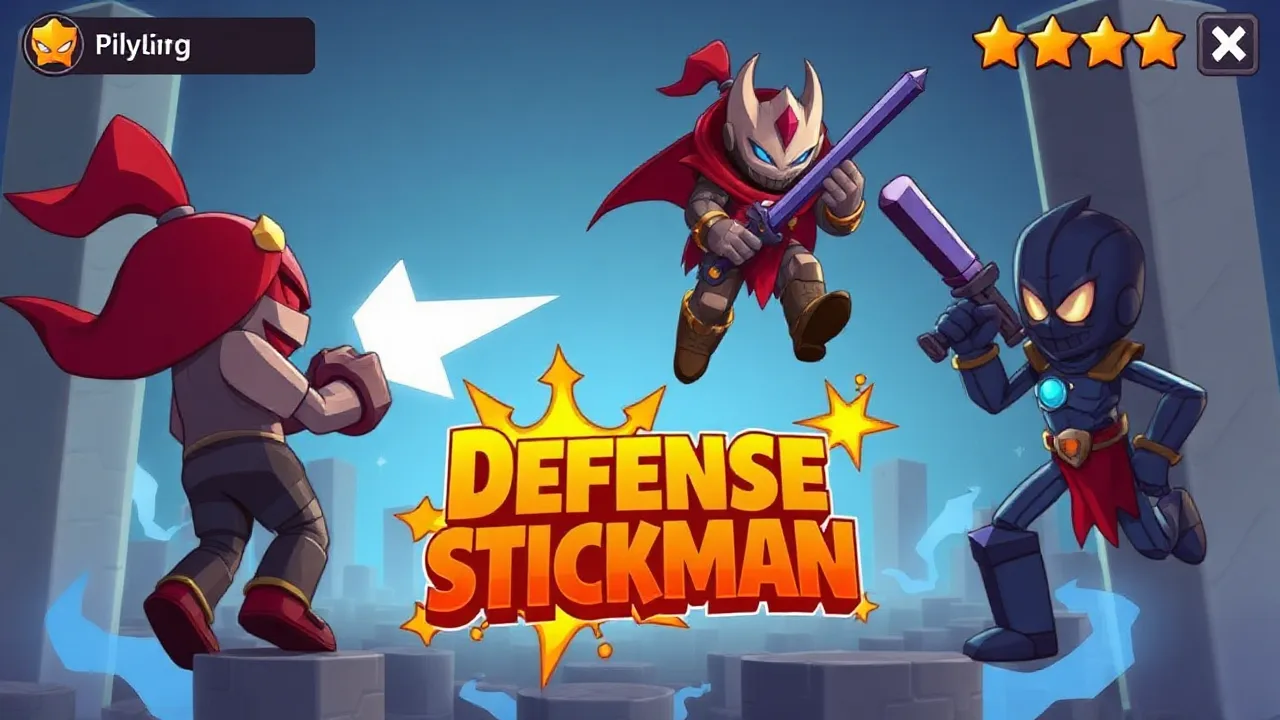
Defense Stickman challenges players to protect their base using strategic tower placement and quick reflexes against waves of approaching enemies. This guide covers essential tactics for maximizing your defensive line and surviving increasingly difficult stages in this engaging stickman-themed strategy game.
Success in Defense Stickman begins with recognizing how different enemy types move and which towers counter them effectively. Fast-moving stickmen require slowing towers or rapid-fire units, while heavily armored foes demand high-damage single-target defenses. Watch how enemies cluster and plan your tower positioning to create overlapping fields of fire that maximize damage output.
The game rewards players who adapt their strategy between waves rather than sticking to a single tower configuration. Early levels teach you the importance of balancing economy with defense, as investing too heavily in upgrades can leave you vulnerable to surprise enemy types.
Optimal Tower Placement Strategies
Strategic tower placement forms the backbone of every successful defense. Position splash-damage towers at chokepoints where enemies naturally congregate, and place sniper towers with long sightlines to pick off high-value targets before they reach your base. Remember that towers with area-of-effect capabilities become exponentially more valuable when enemies travel in tight formations.
Consider the terrain and path layout when deciding where to build. Some positions allow towers to attack enemies from multiple angles, while others might limit your options. Creating a layered defense with different tower types ensures you can handle whatever the game throws at you.
Resource Management and Upgrade Priorities
Managing your in-game currency wisely separates beginners from advanced players. Prioritize upgrading your most effective towers rather than building many weak ones, as a fully upgraded tower often outperforms several basic units. Balance your spending between new towers and upgrades based on the current threat level.
Save resources for critical moments when you know tougher enemies are approaching. The game often gives subtle hints about upcoming challenges through enemy previews, allowing you to prepare your defenses accordingly.
| Feature | Details |
|---|---|
| Gameplay Style | Real-time tower defense with strategic planning |
| Controls | Mouse/touch for tower placement and upgrades |
| Session Pace | Progressive difficulty with increasing wave intensity |
| Device Fit | Playable on desktop and mobile browsers |
| Category Match | Strategy-focused defense gameplay |
Advanced Combat Techniques for Tough Waves
As you progress, the game introduces more complex enemy combinations that require thoughtful counter-strategies. Learn to identify which tower combinations create powerful synergies and which enemies require immediate attention. Some waves feature decoy enemies designed to distract you from more dangerous threats.
Timing your tower activations and ability usage can turn the tide in difficult battles. Watch for patterns in enemy spawning and prepare your defenses accordingly. The most challenging waves often require you to think several steps ahead.
Maximizing Score and Efficiency
Beyond simply surviving, aiming for higher scores requires completing waves quickly while taking minimal damage. Efficient tower placement that eliminates enemies before they advance too far yields better results. Consider which tower configurations allow you to clear waves with fewer resources spent.
Some players find success by focusing on a specific tower type and mastering its applications, while others prefer a balanced approach. Experiment with different strategies to discover what works best for your playstyle.
Common Mistakes and How to Avoid Them
New players often make the error of spreading their defenses too thin across the map. Concentrating your towers in key defensive positions usually proves more effective than building everywhere. Another frequent mistake is ignoring tower upgrades in favor of building new towers, which can leave you underpowered against stronger enemies.
Pay attention to the path enemies take and position your towers to maximize their effectiveness along that route. Avoid placing towers where their range overlaps too much with other towers, as this wastes potential damage output.
Frequently Asked Questions
What makes Defense Stickman different from other tower defense games?
The game combines classic tower defense mechanics with stickman-style visuals and progressively challenging gameplay. Its focus on strategic tower placement and resource management creates a satisfying balance between planning and execution.
How do I handle the first few waves as a new player?
Start by building a few basic towers along the enemy path and focus on understanding how enemies move. Save some resources for upgrades rather than building too many towers early on. As you learn the patterns, you can develop more advanced strategies.
Are there specific tower combinations that work particularly well?
Combining slowing towers with high-damage units creates effective synergy, as enemies spend more time in your towers' range. Similarly, pairing splash-damage towers with area-denial towers can handle large groups of enemies efficiently.
How important is it to upgrade towers versus building new ones?
Upgrading existing towers often provides better value than building new ones, especially in the mid-to-late game. A fully upgraded tower can handle threats that multiple basic towers might struggle against. Balance your spending based on the current challenge level.
Developing Your Personal Defense Style
Every player develops their own preferred approach to tower defense games, and Defense Stickman is no exception. Some players excel at creating intricate defensive networks with multiple tower types, while others prefer streamlined strategies focused on a few powerful towers. Experiment with different approaches to find what suits your thinking style.
The game rewards both careful planning and adaptive thinking, so don't be afraid to try new strategies when your current approach stops working. The most successful players combine solid fundamentals with the flexibility to adjust on the fly.