Find the table game you actually want
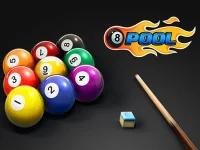
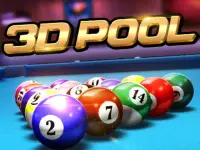
Look for a visible table, pockets and a cue when your goal is billiards. The current listing includes titles such as 8 Ball Pool Master, Billiards World - 8 Ball Pool and 8 Ball Billiards - Offline Free 8 Ball Pool Game. Those names identify relevant table-game options, but they do not guarantee identical controls, opponent choices or rule handling. Open the selected page and read its instructions before treating a familiar title as the same version you played elsewhere.
For a focused introduction to aiming and position, 8 Ball Pool provides a direct table challenge. Consider both the object ball's path to a pocket and the cue ball's likely stopping place. A pot that leaves no comfortable next shot is a different result from one that preserves a useful route. This makes the game as much about the order of decisions as the accuracy of a single strike.
Compare mechanics before comparing results
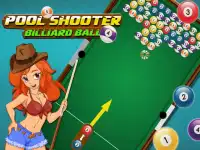
A conventional pool game asks you to judge contact angles and power. A ball-launching puzzle may instead ask you to clear objects or hit a target, while a rolling game can depend on steering and timing. Similar round objects do not make those tasks interchangeable. If you want relaxed aiming practice, select a table presentation. If you prefer continuous movement, choose a title whose description clearly explains that activity.
Pay attention to the current match's group and turn displays. In ordinary eight-ball, solids and stripes have different ownership during play and the black eight has a special role near the end. Do not assume a second browser title implements every detail in the same way. A game that uses a simplified scoring challenge should be judged by its own stated objective, rather than criticised for lacking a feature it never offered.
Make your first session informative
Begin with ordinary shots that reveal the relationship between direction, distance and power. If an open target is missed, ask whether the angle was wrong or whether unnecessary force made the result harder to control. Change one variable where possible. Several unrelated adjustments can produce a successful pot without teaching you which choice helped. A repeatable approach is easier to improve than a sequence of fortunate collisions.
Watch for scratches as well as pots. Sending the cue ball into a pocket can turn an apparently successful stroke into a foul. Before committing, inspect the likely route after contact and notice pockets near that path. Likewise, identify any cluster that will become a problem later. Clearing all the convenient balls first can leave you without a useful position for the difficult ones.
Choose alternatives by the decision they emphasise
The listing's broader ball-game results can be useful when you deliberately want a change of pace. A bouncing challenge may reward quick reactions, while a table game rewards patient inspection before a stroke. Neither is automatically the better choice. Match the activity to the time and attention you have available. Read the destination's actual description instead of relying on the word “ball” or on a thumbnail alone.
When changing pool versions, spend a few shots relearning the controls and the displayed rules. Differences in aiming assistance, power selection or match structure can make scores and outcomes difficult to compare directly. Keep the general habits of checking a legal target and thinking ahead, but let the current game's feedback determine the details. This is particularly important if you arrive with expectations from a separate mobile application.
Go deeper when the basic controls feel comfortable
The pool aiming and position guide develops contact-point thinking, cue-ball safety and simple practice questions. Use it when you can make ordinary inputs reliably and want to understand why a particular shot leaves the next one awkward. Then return to a match with one specific focus. Learning to recognise a useful position is more practical than expecting a written tip to make every difficult pot automatic.